


Many people have never heard of infant massage therapy or its benefits so below you will find some information I have compiled! Please take the time to review the material and let me know if you have any additional questions or concerns! I look forward to working with you and your babe soon!
-Krystal
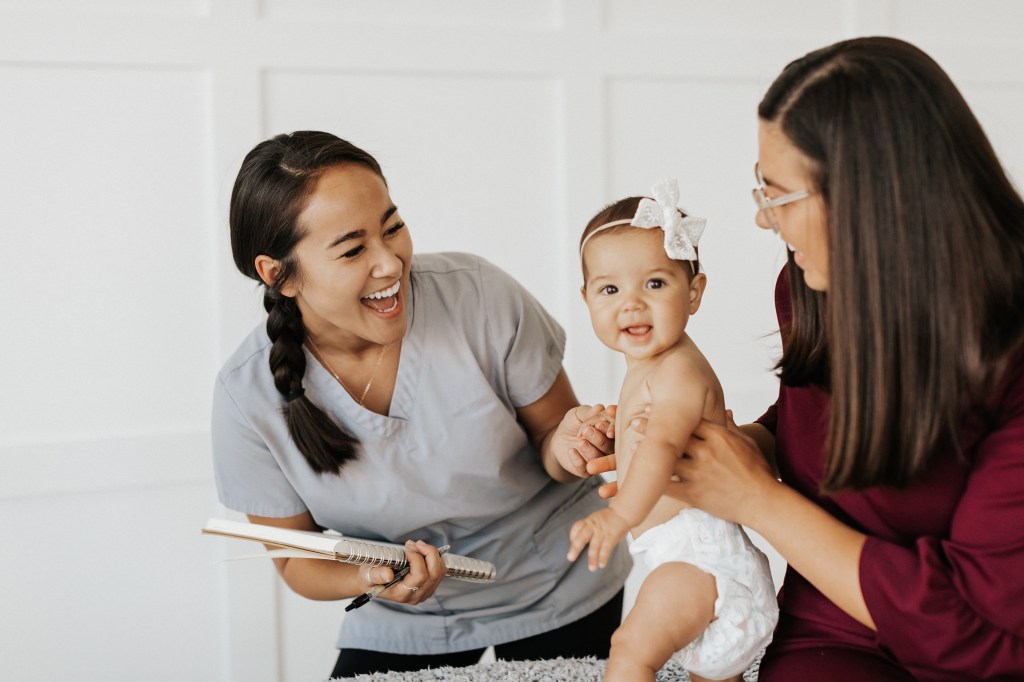
Benefits of Massage to Infant:
- Strengthens and stimulates the development and function of the primary body systems (respiratory, circulatory, nervous, muscular, and gastrointestinal).
- Reduces and relieves gas, colic, constipation, tension, delivery trauma.
- Bonding with parent or caregiver.
- Relaxation; massage creates a balance between stress and relaxation through the massage experience itself.
Benefits of Infant Massage to Parents/Caregivers:
- Releases the hormones prolactin and oxytocin, helping both the father and the mother to bond with and protect the child, and helping the mother’s uterus to contract, and increase her milk production.
- Increases communication between caregiver and baby.
- Increases confidence in caregivers.
Sleep
While massage therapy is not an end-all cure to sleep issues in infants (routines, habits, and consistency are still vitally important to understand and uphold), it can definitely help your little one to get the rest that they need. It does this by lowering stress hormones such as cortisol and norepinephrine, and increasing rest hormones such as serotonin and dopamine to help your child sleep longer and deeper. If your little one is struggling to sleep due to colic or digestive issues, massage can help ease their discomfort and promote more restful sleep.
Weight Gain
Whether your baby was born premature or at full gestation, a low weight can affect his/her overall health. Massage therapy has been shown to increase metabolic absorption of infants, so that even if your child’s appetite stays the same, their bodies are better able to absorb the nutrients that they receive. In a key study, infants who received massage therapy improved in weight, length, and head, leg, and arm circumference compared to those who did not receive massage. (See references below).
Colic
While the exact reason for colic in infants is often unknown, it can usually be narrowed down to a few different things. This could include too much stimuli, gastrointestinal upset, pre/post-natal maternal tobacco use, acid reflux, or food sensitivity. While there are some situations where massage therapy may not make significant changes, others are very much indicated for massage therapy. Gastrointestinal upset for example, can be greatly improved with infant massage.
Baby/Mama Bonding (& lactation).
Infant massage has been shown to increase bonding hormones in infants and caregivers such as oxytocin and prolactin, which are crucial in forming attachment, aiding emotional development, and simulating post-labor uterine contractions and milk-production. Performing infant massage has also been shown to help mothers adapt and cope with the stressors of motherhood.
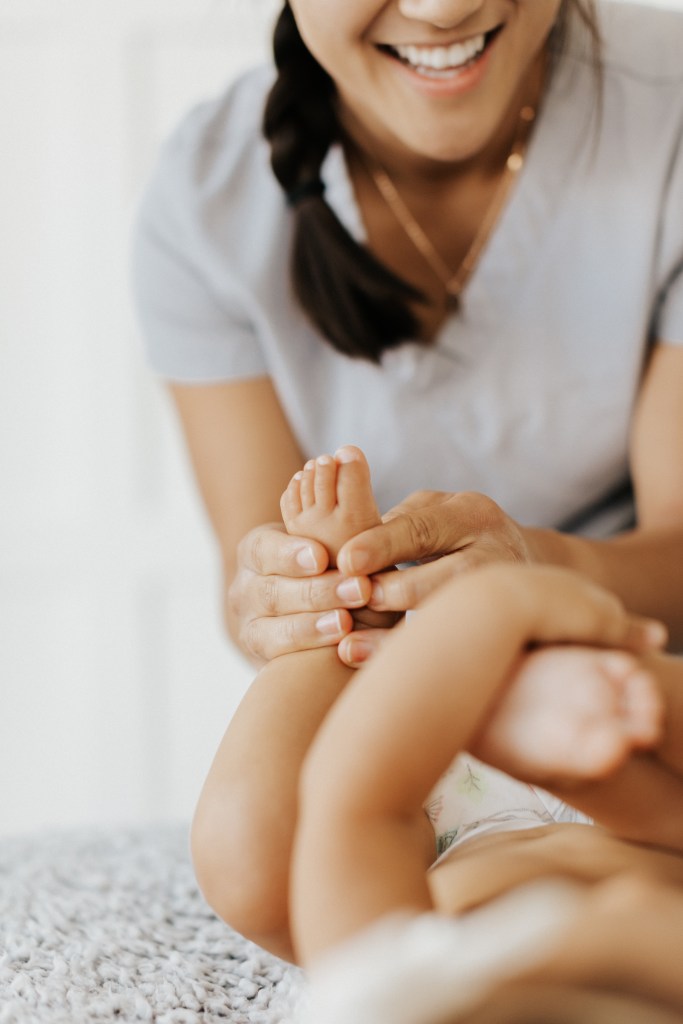
Common Questions:
What if my baby is a little bit older?
As infants grow, massage protocol may need to be adapted in certain ways. However, the more your little one receives massage, they will become more accustomed to it, even enjoying and asking for it. Massage may be adapted and enhanced with songs, actions, music, and essential oils. Even the wiggliest of children can learn to be still and enjoy massage, however, it is important to respect their wants and pay attention to their cues.
What if my baby was born premature?
The effects of infant massage on preterm infants have been observed in various studies around the world. Overall, studies have found that regular massage aids in the organ development, weight-gain, pain relief, and relaxation of medically stable, preterm infants. In fact, an average of a 5-day reduction in hospital stay was found (with estimated financial savings of $10,000 per infant). Moreover, no adverse effects were reported from preterm infant massage therapy.
When is the best time to bring in my infant?
The best time to bring your infant in for a massage (or to perform massage yourself) is when they are in the quiet alert stage. This is usually after the infant has been fed, burped, has a clean diaper, and is well rested. If the infant is too tired or hungry, they may become overstimulated and irritable during their massage.
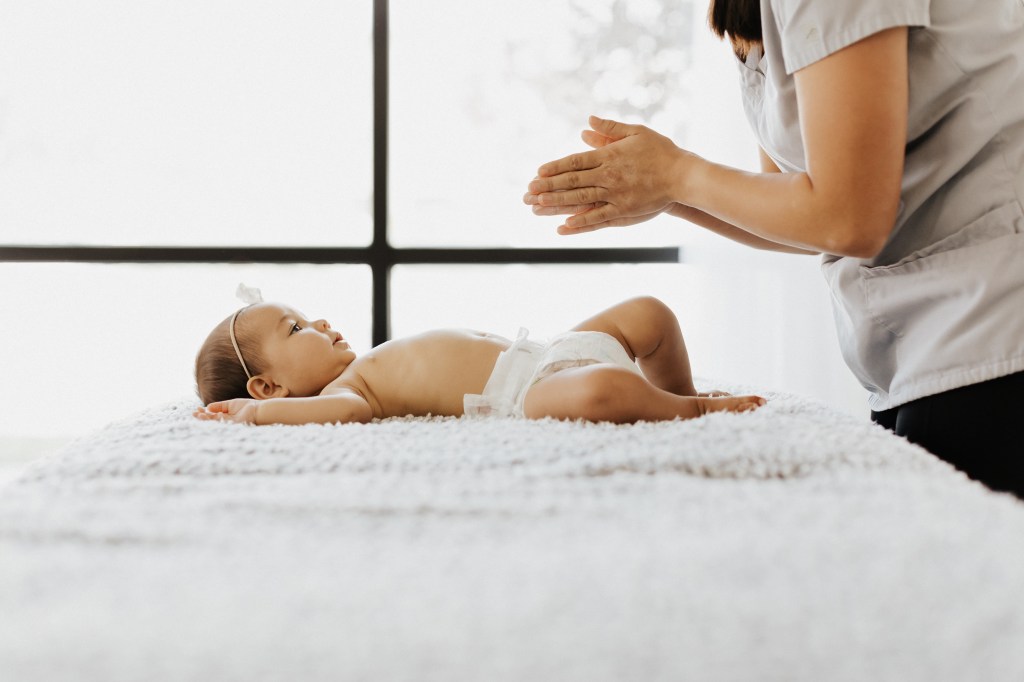
What should I bring to our session?
We will provide blankets and linens for your child’s session. We suggest you bring some of the following items to help your child through the session, especially if this is his/her first time coming in:
-pacifier
-favorite toy, story book, or song
-clean diaper, extra baby wipes
-change of clothes
-bottle
-snack
How much does a session cost?
The cost of an infant session depends on how long your child accepts the massage. If your child is not receptive, we must respect his/her needs by adapting the massage as necessary or rescheduling for another time. Therefore, every session may be a different duration, and there may even be times where a child is completely unreceptive. Payment is left to the discretion of the therapist, ranging from $10 to no more than $30.
What if my child is not receptive?
Even though infants cannot communicate verbally, we must read and respect their non-verbal cues. Prior to working on your infant, consent will be obtained from non-verbal cues such as eye contact, smiling, giggling, or babbling. Non-consent cues include avoidance of eye-contact, crying, turning or kicking away, or shaking the head.

With that being said, massage therapy is a new and sometimes uncomfortable thing for an infant. Some fussing during the session is normal, however, when a child begins crying inconsolably, the caregiver and therapist must determine the best course of action, whether that is to adapt and continue, take a break or reschedule for another time.
What if my child needs to breastfeed/take a bottle during the session?
If your child needs to eat before, during, or after the session, please let your therapist know. We are happy to provide you with the time and space to do so.
How long is an infant massage session?
A full infant protocol is around 25-30 minutes. Some infants will not tolerate the full duration and that is just fine! Also keep in mind the time it takes to discuss needs & goals with your therapist, clothe, diaper, feed, and console your baby if needed.
Do I get to sit with my child during their session?
Yes! It is highly recommended and preferred that you stay close to your child during the session. This is to help ease any worry or concern that your child may have, as well as aid in bonding, and allow you to observe techniques to try at home on your own.
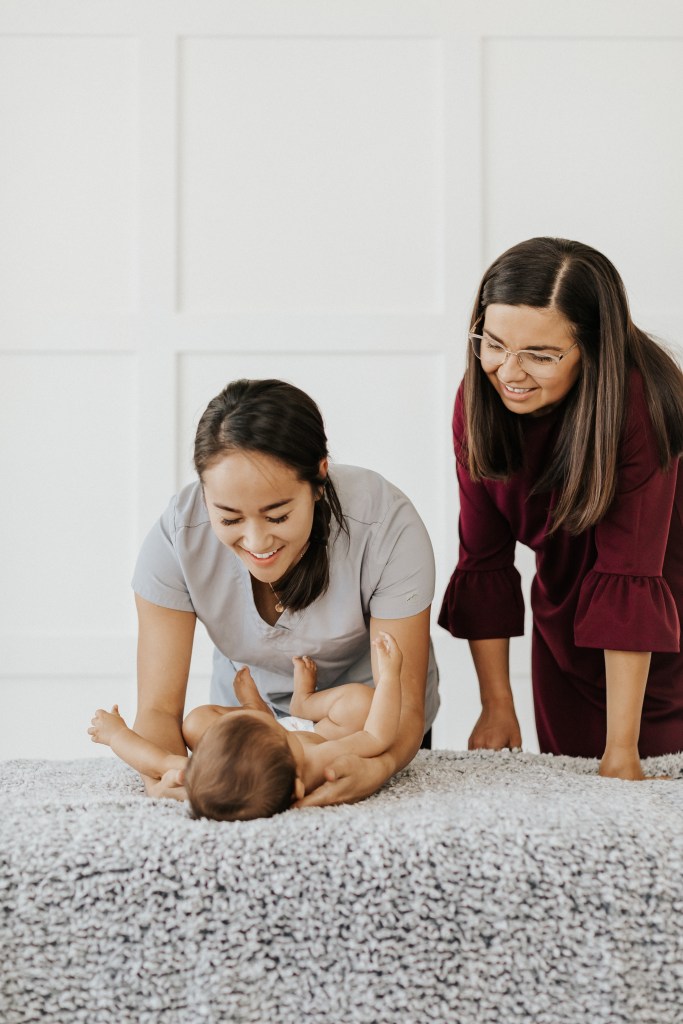
I hope this helped! Please don’t hesitate to reach out with any further questions or concerns. We can’t wait to meet your little one soon!
Sources:
Bellefonds, C. (2020, November 04). Colic in babies: Signs, causes and tips for parents. Retrieved April 17, 2021, from https://www.whattoexpect.com/first-year/health-and-safety/what-is-colic/
Field T, Hernandez-Reif M, Diego M, Schanberg S, Kuhn C. Cortisol decreases and serotonin and dopamine increase following massage therapy. Int J Neurosci. 2005 Oct;115(10):1397-413. doi: 10.1080/00207450590956459. PMID: 16162447.
Field, T., Morrow, C., Valdeon, C., Larson, S., Kuhn, C., Schanberg, S.(1992). Massage reduces anxiety in child and adolescent psychiatric patients. J Am Acad Child Adolesc Psychiatry. 31(1):125-31.
Field, T., Hernandez-Reif, M., & Freedman, J. (2004). Stimulation programs for preterm infants. Social Policy Report,18(1), 1-20. doi:10.1002/j.2379-3988.2004.tb00024.x
Olff, M., Frijling, J. L., Kubzansky, L. D., Bradley, B., Ellenbogen, M. A., Cardoso, C., . . . Van Zuiden, M. (2013). The role of oxytocin in social bonding, stress regulation and mental health: An update on the moderating effects of context and interindividual differences. Psychoneuroendocrinology, 38(9), 1883-1894. doi:10.1016/j.psyneuen.2013.06.019
Parents & caregivers – benefits. (n.d.). Retrieved April 17, 2021, from https://www.infantmassageusa.org/parents-caregivers-benefits
 utahmedicalmassageandwellness.com